Stop redundant purchases before they start
Guide employees to approved solutions, improve request quality, and reduce unnecessary software spend with technology intelligence built into the request process.
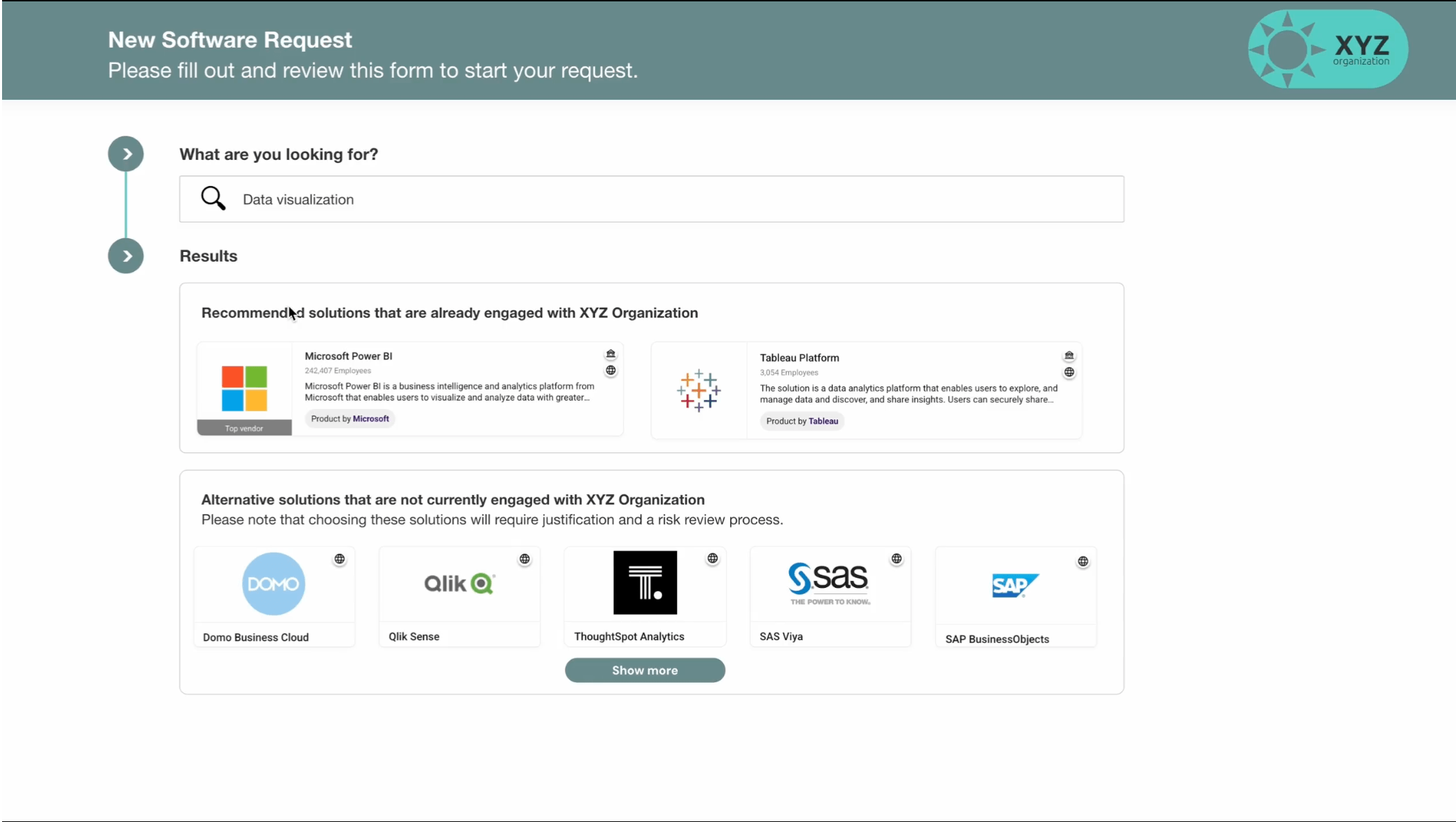
Most software requests start blind
Employees often don't know what solutions already exist, what standards have been approved, or which products meet their needs. That creates unnecessary purchases, inconsistent decisions, and avoidable work for architecture and procurement teams.
New requests are submitted for capabilities the organization already owns.
Missing or inaccurate product details slow reviews and approvals.
Standards are ignored because employees can't easily find approved alternatives.

Software demand keeps accelerating
Business teams need technology faster than ever, but traditional request processes haven't evolved. Every new request creates an opportunity for redundant purchases, policy exceptions, and unnecessary spend.
Turn requests into better decisions
Entrio provides the intelligence layer that enables AI governance, risk management, and compliance, without relying on direct vendor communication or manual audits.
Find solutions before requesting them
Employees can search by product, vendor, capability, or business need before submitting a request. Existing solutions are surfaced early, reducing unnecessary purchases.


Guide users toward approved technology
Preferred vendors and existing technologies are highlighted directly within the request experience, encouraging reuse and increasing standardization.
Pre-populate request data
Software requests are automatically enriched with current vendor, product, and solution intelligence. Teams spend less time gathering information and correcting errors.


Create a single intake process
Standardized request data helps architecture, procurement, security, and risk teams evaluate requests faster and more consistently.
Fewer and less manual requests, better outcomes
Built for modern enterprise complexity
Entrio gives you full visibility into the technology ecosystem.
Requests are enriched with continuously updated vendor and solution information.
Technology intelligence helps employees choose the right solution before procurement begins.
Connect internal technology inventories with broader market intelligence in one experience.
Improve every software request
Reduce redundant purchases and make technology governance easier.


